
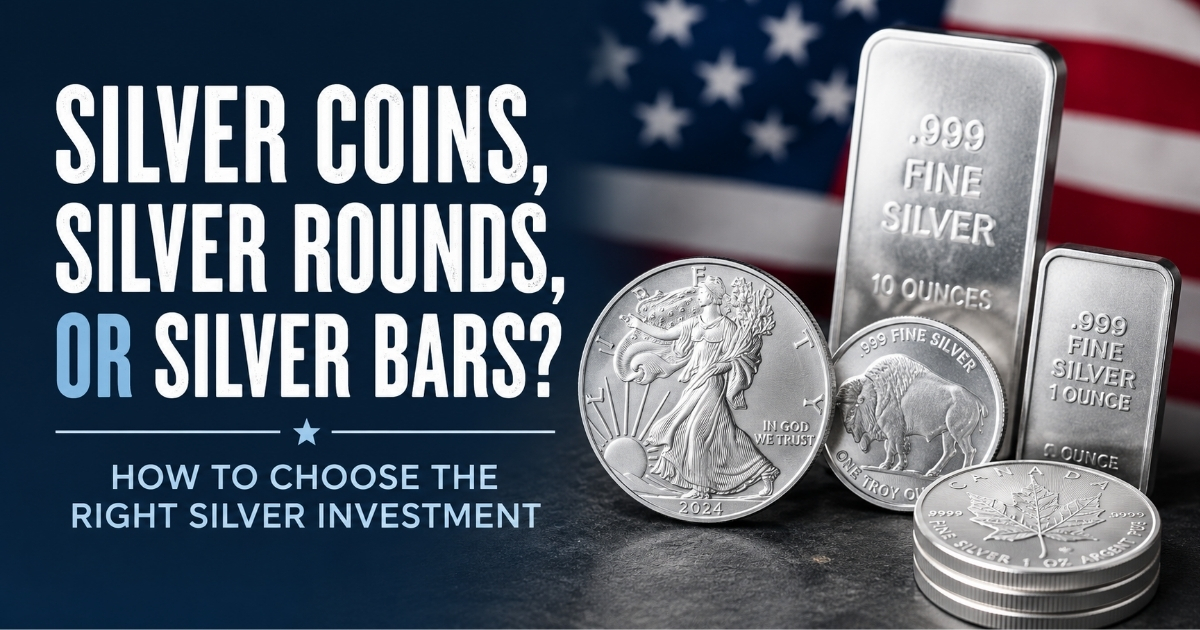
Silver Coins, Silver Rounds, or Silver Bars? How to Choose the Right Silver Investment
Silver Coins, Silver Rounds, or Silver Bars? Understanding Your Options
When most investors begin researching physical silver, they quickly encounter what appears to be a simple decision: should they buy silver coins or silver bars? Explore our full selection of Silver Coins & Bars to compare your options. In reality, there is a third category that deserves equal consideration ~ silver rounds.
Each product type offers distinct advantages. Government-issued bullion coins provide broad recognition and sovereign backing. Silver bars often allow investors to maximize the number of ounces acquired for their investment dollars. Silver rounds occupy a middle ground, combining many of the practical benefits of coins with the lower premiums often associated with privately minted products.
At First Gold Group, we find that many investors initially focus on only one category before eventually realizing that all three product types can serve a purpose within a precious metals portfolio. Understanding the differences can help you make a more informed decision and select products that align with your objectives rather than simply following conventional wisdom.
Quick Answer
If your primary goal is acquiring the greatest amount of silver possible for your investment dollars, larger silver bars often provide the greatest premium efficiency. If you value government-issued products with global recognition, bullion coins may be worth the additional premium. For investors seeking the convenience of one-ounce products without the higher cost of many government-issued coins, silver rounds can offer an attractive compromise.
Many experienced silver investors ultimately own a combination of coins, rounds, and bars because each product category offers unique advantages.
Silver Products at a Glance
| Factor | Silver Coins | Silver Rounds | Silver Bars |
|---|---|---|---|
| Typical Premium | Highest | Moderate | Lowest |
| Government Issued | Yes | No | No |
| Legal Tender Status | Yes | No | No |
| Recognition | Excellent | Good to Excellent | Good to Excellent |
| Storage Efficiency | Good | Good | Excellent |
| Flexibility | Excellent | Excellent | Varies by Size |
| IRA Eligibility | Many Qualify | Generally No | Many Qualify |
| Best Known For | Recognition | Value & Flexibility | Lowest Cost Per Ounce |
First, Let’s Clear Up a Common Misconception
One of the most common misconceptions in the precious metals industry is the belief that silver bullion and silver coins are different things. In reality, many popular investment-grade silver coins are bullion products.
American Silver Eagles, Canadian Silver Maple Leafs, Austrian Silver Philharmonics, British Silver Britannias, and Australian Kangaroos all derive most of their value from their silver content rather than rarity or collectibility. While they carry legal tender status, investors generally purchase them because they contain physical silver.
The more accurate comparison is not silver bullion versus silver coins. Rather, investors are typically comparing government-issued bullion coins, privately minted silver rounds, and silver bars.
Why Investors Buy Physical Silver
People purchase physical silver for a variety of reasons. Some view it as a hedge against inflation and currency devaluation. Others appreciate its role as a tangible asset that exists outside the banking system. Still others are attracted to silver’s dual role as both a precious metal and an industrial metal used in electronics, solar panels, medical applications, and other technologies.
Regardless of the motivation, investors generally seek products that offer a combination of value, liquidity, security, and long-term durability. Coins, rounds, and bars each address those objectives in different ways.
Premiums and Cost Per Ounce
Premiums represent one of the most important considerations when selecting silver products. The spot price of silver reflects the market value of the metal itself, but physical products almost always trade above spot because of refining, manufacturing, transportation, insurance, and distribution costs.
Silver bars generally offer the lowest premiums because they are relatively inexpensive to manufacture. Browse our selection of Silver Bars & Rounds to find products that fit your investment goals. Larger bars often provide even greater efficiency on a per-ounce basis, making them attractive to investors focused on maximizing silver ownership.
Government-issued bullion coins typically carry the highest premiums. Investors pay not only for the silver content but also for the minting process, legal tender status, security features, and strong market demand.
Silver rounds frequently fall between the two. Because they are privately minted and do not carry legal tender status, they often sell for less than government-issued coins while maintaining the convenience of a one-ounce format. This combination of affordability and flexibility is one reason rounds remain popular among silver investors.
Recognition, Liquidity, and Selling Considerations
Government-issued bullion coins enjoy exceptional recognition throughout the precious metals marketplace. Many investors instantly recognize products such as the American Silver Eagle and Canadian Silver Maple Leaf, which can provide confidence when buying or selling.
Silver bars and rounds from respected private mints are also widely accepted throughout the industry. Dealers regularly buy and sell these products, and reputable manufacturers have established strong credibility over many years.
The practical difference is often familiarity rather than liquidity. While government-issued coins may be more recognizable to the general public, established rounds and bars remain highly marketable and are routinely traded throughout the precious metals marketplace.
Don’t Overlook Silver Rounds
Silver rounds are frequently overlooked by first-time investors, yet they may represent one of the most compelling values in the silver market.
Most rounds contain one troy ounce of .999 fine silver and closely resemble bullion coins in appearance and size. Unlike coins, however, they are produced by private mints rather than government mints and do not carry a face value. Because of this distinction, rounds often command lower premiums than government-issued bullion coins.
For investors who appreciate the flexibility of one-ounce products but prefer to minimize premium costs, rounds can be an attractive option. They are easy to accumulate over time, simple to store, and widely recognized when produced by respected private mints.
Many investors who compare only coins and bars overlook rounds entirely. In reality, rounds often provide an appealing balance between affordability, flexibility, and convenience.
What We See From Silver Investors
One of the more interesting observations we have made over the years is that investors rarely remain committed to a single product category. New investors often begin with government-issued bullion coins because they are familiar and easy to understand. As they gain experience, many start paying closer attention to premiums and total ounces acquired.
Some eventually add bars to improve premium efficiency. Others discover silver rounds and appreciate the opportunity to acquire one-ounce products at lower costs than many government-issued alternatives. Over time, many investors build holdings that include all three product types.
At First Gold Group, one of the most common questions we receive from new precious metals investors is whether they should purchase coins, rounds, or bars. What we often find is that the decision becomes less about choosing a single “best” product and more about understanding the role each product can play within a broader precious metals strategy.
Rather than searching for a universally superior silver product, experienced investors tend to focus on balancing cost efficiency, flexibility, recognition, and personal preference.
Frequently Asked Questions
Are silver rounds a good investment?
Many investors believe so. Silver rounds often provide a lower-cost alternative to government-issued bullion coins while still offering the flexibility and convenience of one-ounce silver products.
What is the difference between a silver round and a silver coin?
Silver coins are issued by government mints and carry legal tender status. Silver rounds are privately minted and do not have a face value, even though they may contain the same amount of silver.
Why are silver rounds cheaper than silver coins?
Because silver rounds are privately minted and do not carry legal tender status, they generally cost less to produce and often trade at lower premiums than government-issued bullion coins.
Are silver rounds easy to sell?
Yes. Reputable silver rounds from recognized private mints are widely bought and sold throughout the precious metals industry.
Are silver bars better than silver rounds?
Neither is universally better. Bars often provide lower premiums and greater storage efficiency, while rounds offer the flexibility of one-ounce products and may be easier to buy or sell in smaller quantities.
Are silver coins better than silver rounds?
That depends on an investor’s priorities. Coins offer government backing and broad recognition, while rounds often provide lower premiums and more silver for the same investment dollars.
The Bottom Line
Silver coins, silver rounds, and silver bars all provide investors with exposure to physical silver, but each does so in a slightly different way. Government-issued bullion coins offer exceptional recognition and a long history of investor demand. Silver bars typically provide the most efficient path to acquiring larger quantities of silver. Silver rounds often occupy a practical middle ground, combining affordability with the flexibility of one-ounce ownership.
For many investors, the best approach is not choosing one category exclusively but understanding the advantages of each. By evaluating premiums, recognition, storage requirements, flexibility, and personal objectives, investors can build a precious metals portfolio that aligns with their goals and preferences.
Ultimately, the most important decision is not whether to buy coins, rounds, or bars. It is taking the first step toward owning physical silver and selecting products that fit your long-term strategy.